Published in: Angewandte Chemie International Edition (2024)
Authors: Ieva A. Cechanaviciute, Bhawana Kumari, Lars M. Alfes, Corina Andronescu, Wolfgang Schuhmann
Ammonia (NH₃) is increasingly recognized not only as a vital industrial chemical but also as a promising hydrogen carrier. Traditional ammonia oxidation, however, often leads to nitrogen gas (N₂) — a thermodynamically stable but low-value product. This study introduces a groundbreaking alternative: gas-phase electrocatalytic oxidation of NH₃ using gas diffusion electrodes (GDEs) to produce value-added nitrite (NO₂⁻) instead of N₂, thereby doubling hydrogen output while avoiding energy losses.
Researchers developed a model flow-through electrolyzer using multi-metal catalysts on high-surface-area Ni foam, forming GDEs. These electrodes enabled direct oxidation of gaseous NH₃ supplied from the backside, mimicking a scalable system using green ammonia. High entropy alloy-inspired catalyst compositions, including Nif_AlCoCrCuFe and Nif_AgCoCuNiZn, were synthesized and tested for activity and selectivity.
High Faradaic Efficiencies: NO₂⁻ formation reached up to 88%, with nearly 100% efficiency for H₂ production at the cathode.
Oxygen Evolution Suppression: Compared to conventional water electrolysis, the system operates at lower voltages (e.g. ~1.4–1.8 V), reducing parasitic OER.
Catalyst Selectivity Matters: The presence of Co and Cu in the catalyst composition was critical for selective NO₂⁻ production.
Minimal NO₃⁻ Formation: Even under high potentials, nitrate production remained negligible — a major advantage over traditional oxidation pathways.
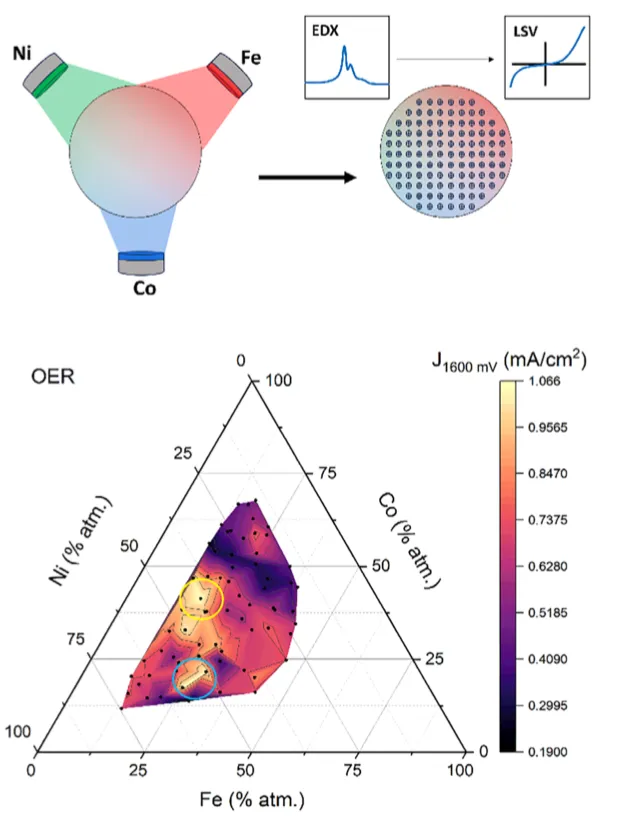
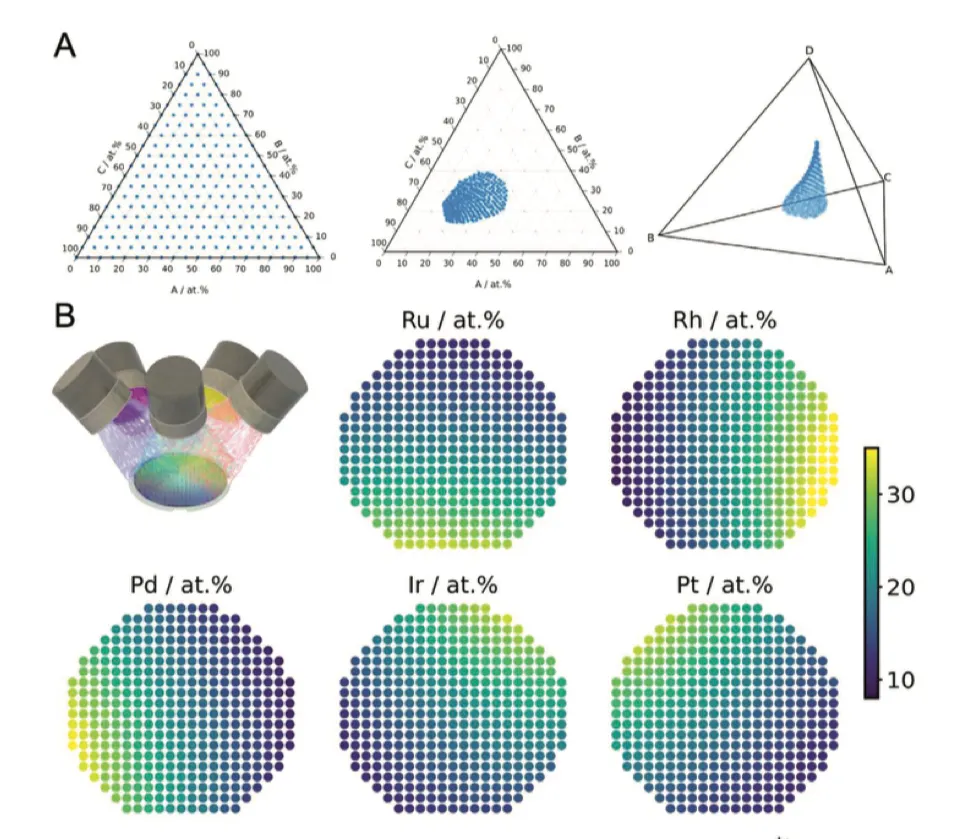
Scalability Potential: The method leverages cheap, non-noble metals and supports further optimization through high-throughput screening.
This work reimagines ammonia electrolysis by shifting the focus from N₂ to NO₂⁻ generation. The dual output of clean hydrogen and valuable nitrogen compounds offers a more energy-efficient and economically viable route, reducing reliance on the energy-intensive Ostwald process for nitrate production.
The study lays the groundwork for next-gen ammonia conversion systems. Future research will involve adapting high-throughput synthesis strategies to discover even more stable and selective catalysts, enabling industrial-scale deployment of GDE-based ammonia electrolyzers.
Published: