lignin electrooxidation,pulse electrolysis,vanillin production
Published
19. December 2023
Oxidative Depolymerisation of Kraft Lignin: From Fabrication of Multi-Metal-Modified Electrodes For Vanillin Electrogeneration via Pulse Electrolysis To High-Throughput Screening of Multi-Metal Composites
From Waste to Value: Green Vanillin Production from Kraft Lignin via Electrocatalysis
Authors: Ann Cathrin Brix, Olga A. Krysiak, Ieva A. Cechanaviciute, et al.
Electrochemical Valorization of Lignin
Lignin, a major byproduct of the paper industry, holds immense potential as a source of valuable aromatic chemicals. This study explores an innovative approach to upcycle lignin into vanillin, a high-value flavor compound, through oxidative electrochemical depolymerisation using multi-metal-modified Ni foam electrodes.
Pulse Electrolysis Boosts Selectivity
Static electrolysis of lignin often results in excessive degradation of vanillin due to overoxidation. The authors demonstrate that galvanostatic pulse electrolysis — switching between low and high current densities — significantly improves vanillin yields and energy efficiency by allowing reaction intermediates to diffuse before overoxidation can occur.
Multi-Metal Catalyst Design and Screening
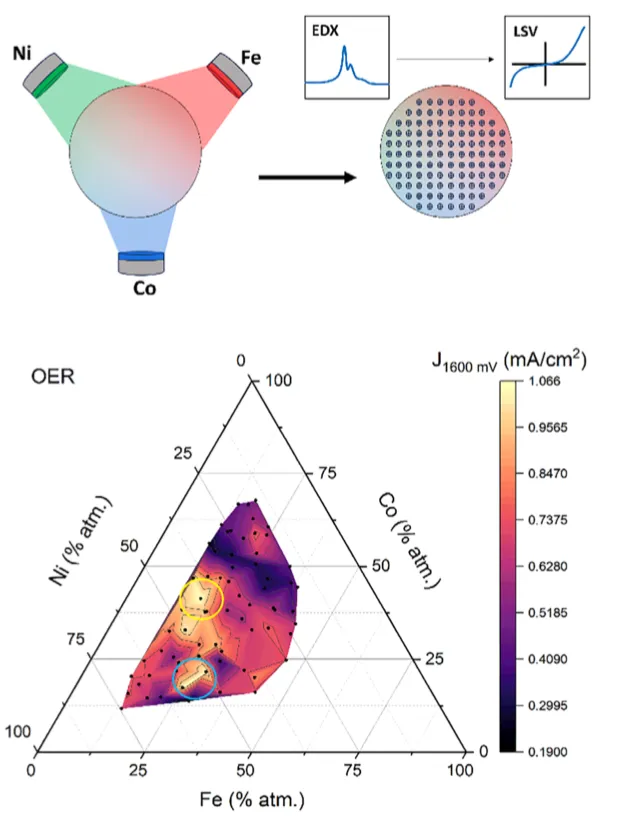
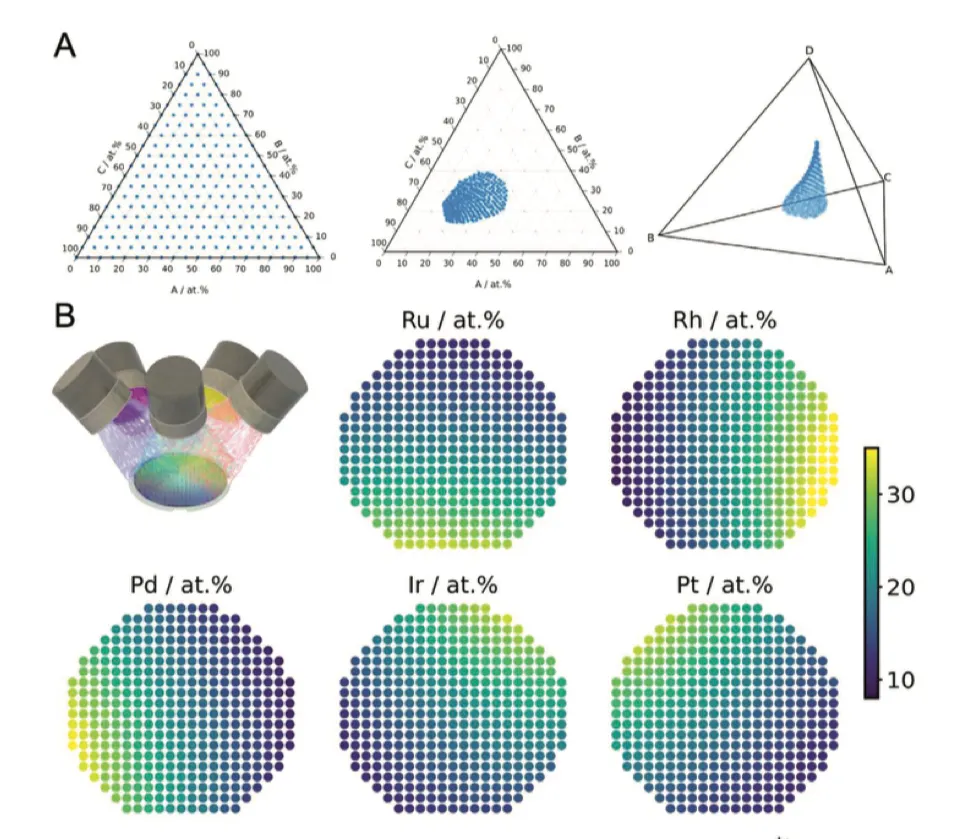
Catalyst development focused on cost-effective, non-noble multi-metal composites such as CoCuNiFeAl and Cu44Co41Pd15. Using a scanning droplet cell method, the team rapidly screened thin-film materials libraries for optimal electrocatalytic behavior. The best-performing compositions exhibited high activity for lignin oxidation while suppressing parasitic reactions like OER and vanillin overoxidation.
Key Results
Cu44Co41Pd15/Ni foam electrodes achieved enhanced vanillin production at elevated temperatures using pulse electrolysis.
The system demonstrated good stability, selectivity, and reproducibility.
UV-Vis and HPLC analysis confirmed vanillin formation and helped quantify byproducts like acetovanillone and vanillic acid.
A Scalable, Green Alternative
This approach avoids the use of toxic oxidants and operates under mild conditions, offering a sustainable route to green chemical production. The combination of flow-through electrolyzers, pulse operation, and high-throughput catalyst screening paves the way for industrial applications in biomass valorization and electrosynthesis.
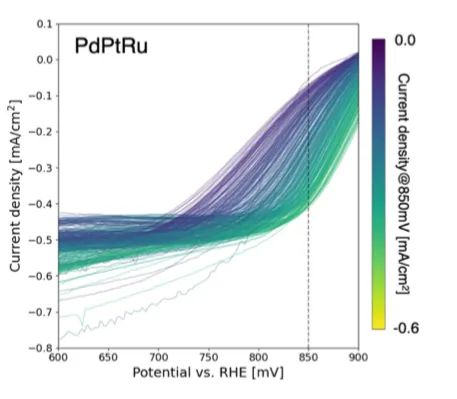
Unravelling Composition–Activity–Stability Trends in High Entropy Alloy Electrocatalysts by Using a Data-Guided Combinatorial Synthesis Strategy and Computational Modeling